Crown Heights
Loft Space.
Tell us once what you're after — including the floors that never hit the listing sites. A person reads it. That's the whole thing.
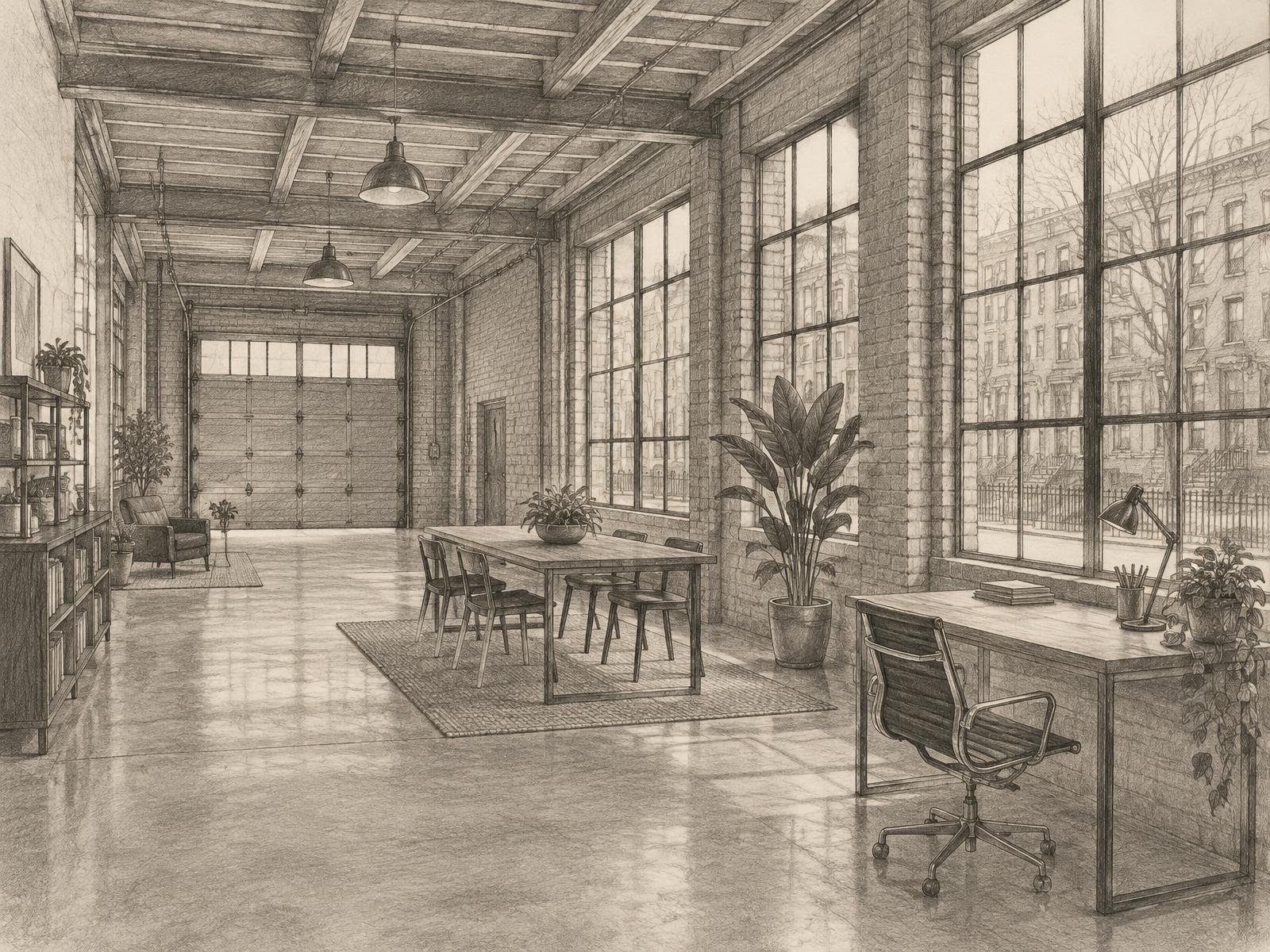
Seven questions.
That's the whole thing.
Under two minutes. No account, no login. A person reads every one.
How much room do you need?
Crown Heights is in central Brooklyn. These are search-area markers, not surveyed boundaries: Atlantic Avenue to the north, Empire Boulevard to the south, Washington Avenue to the west and Ralph Avenue to the east. The manufacturing-zoned belt sits near Atlantic Avenue, between Atlantic and Bergen Street in the west and along the Atlantic industrial strip toward Ralph Avenue; Franklin, Bedford, Utica and Kingston avenues carry much of the commercial frontage. Landmarked row-house districts, including the Crown Heights North Historic District, are neighborhood context, not residential space offered here. Zoning and lawful commercial use must be checked building by building.
Eastern Parkway, Fulton Street and a shuttle between them.
The 2, 3, 4 and 5 run along Eastern Parkway, with the 2 and 5 also serving Nostrand Avenue. The A and C run on Fulton Street at the northern edge, the Franklin Avenue Shuttle links the two, and the Long Island Rail Road stops at Nostrand Avenue on Atlantic Avenue.
- Franklin Av–Medgar Evers College
- Nostrand Av
- Kingston Av
- Crown Hts–Utica Av
The main trunk line through the neighborhood, useful for the corridor blocks and the walk north toward Atlantic Avenue.
- President St–Medgar Evers College
- Sterling St
The 2 and 5 branch along Nostrand Avenue, serving the southern side of the search area.
- Franklin Av
- Nostrand Av
- Kingston–Throop Avs
The A and C run along Fulton Street at the northern edge, closest to the Atlantic-to-Bergen industrial belt.
- Franklin Av
- Park Pl
- Botanic Garden
The shuttle connects the Fulton Street and Eastern Parkway lines at Franklin Avenue.
- Nostrand Avenue · Atlantic Avenue
The LIRR stops at Nostrand Avenue on Atlantic Avenue, on the northern edge of the industrial blocks.
- B44 SBS on Nostrand / Rogers
- B45 · B65 · B43 · B49 local routes
B44 Select Bus Service runs on Nostrand/Rogers; B45, B65, B43 and B49 provide local connections. Check the current stop and route for the specific building.
The industrial blocks near Atlantic Avenue sit between the Fulton Street and Eastern Parkway lines, so check the real walk to the door. Buses, including the B44 Select Bus Service on Nostrand/Rogers, matter for addresses farther from a station.
Garages, breweries, a parkway in between.
Crow Hill → today
Crow Hill and the high ground
Before the row-house districts, the area was farmland around high ground known as Crow Hill. The elevation and farm landscape preceded the street grid, and later decisions about transit, parks and industry shaped where buildings went — the background to today's very limited supply of true commercial floors.
Weeksville, a free Black community
Weeksville, a free Black community founded in 1838, was established in what is now eastern Crown Heights. Its institutions and memory remain part of the neighborhood's identity, and the historic sites around it are context for any search on the east side, not commercial inventory.
Eastern Parkway sets the residential character
Eastern Parkway, laid out by Olmsted and Vaux in the 1870s, established a residential, parkway-led character and pushed industry toward the Atlantic Avenue rail edge. That split explains today's geography: row-house streets through the middle, and working commercial buildings concentrated near Atlantic Avenue.
Breweries and bottlers near Bergen and Dean
Breweries and bottlers operated near Bergen and Dean streets as part of the manufacturing belt between Atlantic Avenue and Bergen Street. Surviving industrial buildings from this working era are why the belt holds much of the area's loft-type stock; their appearance says nothing about present-day use permission.
Bedford Avenue's automobile row
In the 1910s and 1920s, Bedford Avenue developed as an automobile row of showrooms, garages and service stations. Early car-era buildings left large glass showroom facades and garage structures, some later adapted to other commercial uses. Each building's current lawful use still has to be checked individually.
Caribbean and Hasidic communities shape the commercial streets
Through the later twentieth century, Caribbean and Hasidic communities shaped the neighborhood's commercial streets, shops and institutions. The corridors along Franklin, Utica and Kingston carry that daily commerce today; they are local main streets rather than a polished office district.
Landmarked rows and a manufacturing belt under pressure
Landmarked row-house districts, including the Crown Heights North Historic District, preserve the residential streets while the manufacturing belt near Atlantic Avenue faces redevelopment pressure. This is why real commercial floors are limited and concentrated — and why lease term and redevelopment clauses matter as much as the space itself.
Who you'd be sharing the block with.
- Former garages and auto-service buildings
- Warehouses along Pacific, Dean and Bergen
- Brewery-era industrial buildings
- Blocks under redevelopment pressure
- Franklin Avenue shops and services
- Bedford Avenue's former automobile row
- Showroom and upper commercial floors
- Closest blocks to the 2, 3, 4, 5, shuttle and A/C
- Utica and Kingston commercial streets
- Weeksville history and institutions
- Workshops and small warehouses
- Longer walks to some trains
- Studios in adapted garages and warehouses
- Light production where permitted
- Ground-level doors and loading
- Noise, ventilation and hours to verify
- Local retail and service corridors
- Caribbean and Hasidic businesses and institutions
- Storefront streets, not an office district
- Deliveries and truck activity near Atlantic Avenue
- Crown Heights North Historic District
- Row-house streets, not residential offerings
- Exterior alteration review where designated
- Commercial-use checks for each property
Why bother
The best floors are gone before they're listed. Character space moves through people, not portals — so we do it the other way around. You tell us what you'd love. We keep an eye out.
You told us what you need. That's where it ends.
No newsletter, no CRM queue, no "just checking in." A person reads your brief and reaches out directly when a floor's worth showing you.
- 01
We never sell, share or rent your brief — not to landlords, not to other brokers, not to a data company.
- 02
No newsletters or mass blasts. When we get in touch, it's a direct email or text about a specific space.
- 03
A person reads it. Not a bot, not a queue in some CRM.
- 04
Tell us to stop and we stop. Simple as that.
The Definitive Guide to Crown Heights Loft Offices
Former garages, warehouses and brewery buildings near Atlantic Avenue, the Franklin and Bedford corridors and the east side — with the checks that make a commercial space usable.
Three sides of Crown Heights.
Atlantic to Bergen, Franklin and Bedford, and the east side. Tell us which fits your work.
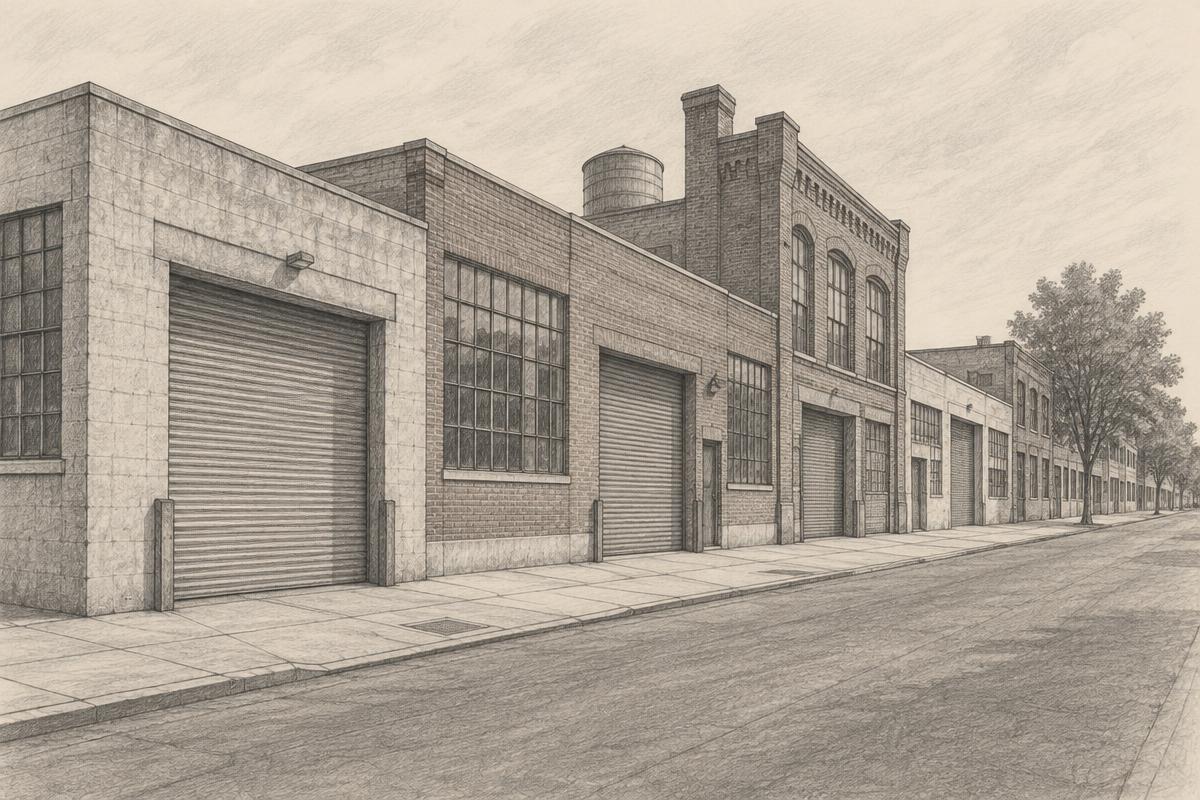
The manufacturing-zoned belt in the west, between Atlantic Avenue and Bergen Street along Pacific, Dean and Bergen: former garages, auto-service buildings, warehouses and brewery buildings, some adapted into studios and creative offices. Concrete floors and ground-level vehicle doors. Parts of the belt are being redeveloped, so lease term and redevelopment clauses matter.
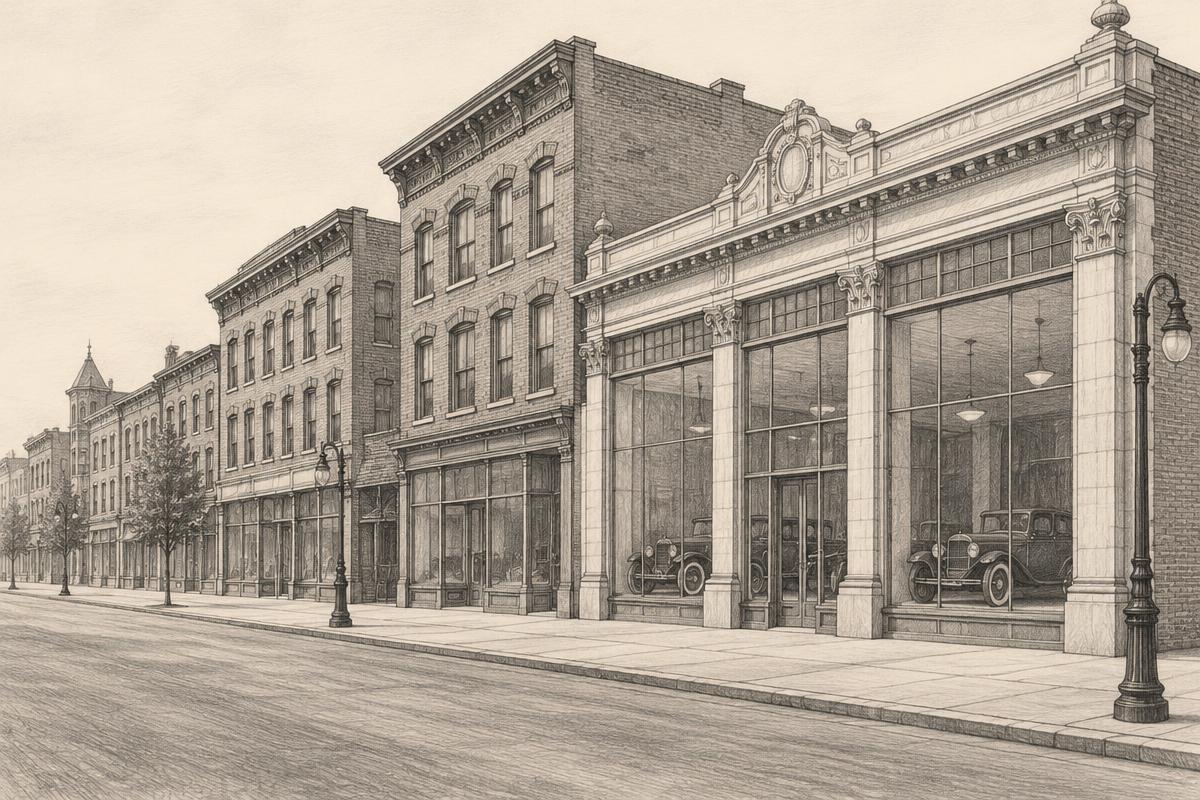
Franklin Avenue's commercial corridor and Bedford Avenue's former automobile row: early car-era showroom and service buildings, storefronts and upper commercial floors, closest to the 2, 3, 4, 5, the Franklin Avenue Shuttle and the A/C. Do not assume every upstairs floor is a legal office.
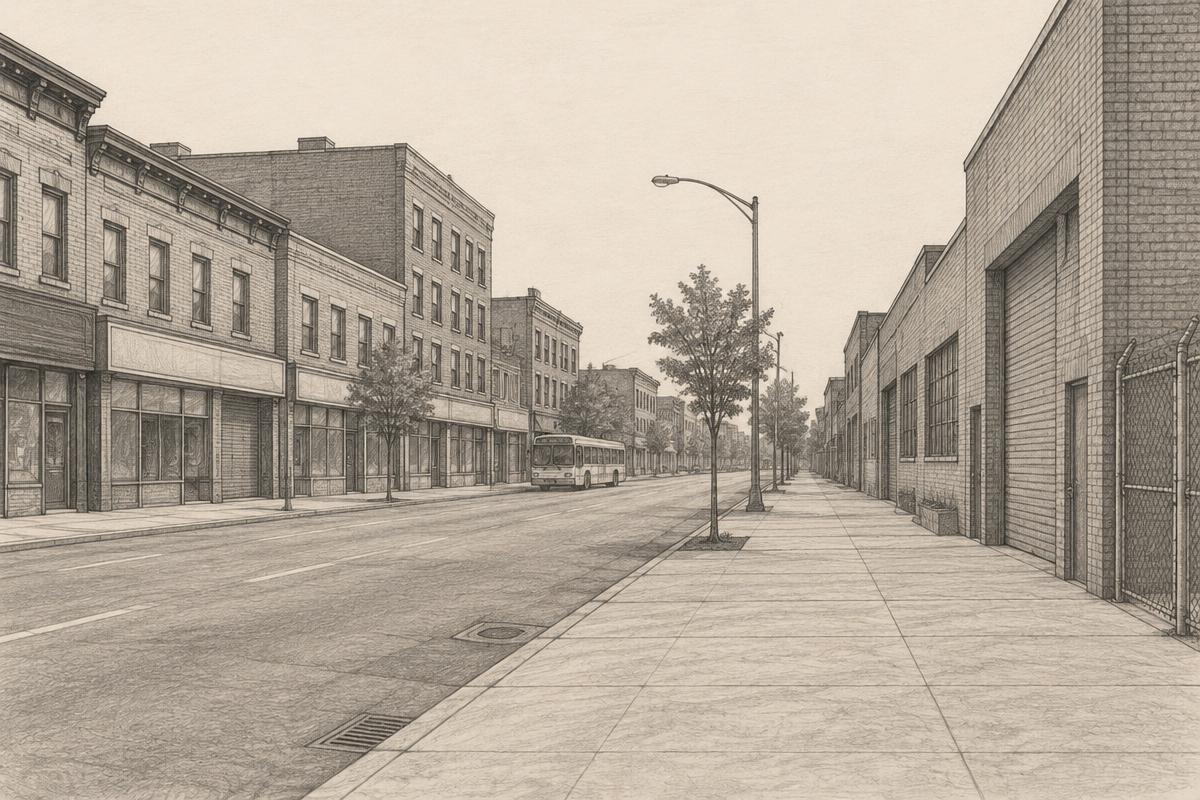
Utica and Kingston avenues, Weeksville and the Atlantic Avenue industrial strip toward Ralph Avenue: workshops, small warehouses and local commercial floors, with longer walks to some trains. Check the actual route from the station to the door.
What people ask before they take a loft in Crown Heights.
01What counts as a creative office loft in Crown Heights?
02How much does Crown Heights loft space cost?
03Where should I look for industrial loft space?
04What is the Franklin and Bedford area like for an office search?
05What about Utica and the east side?
06How do I get to Crown Heights?
07Can I run a studio or light production here?
08How do the historic districts affect a search?
09What should I check before comparing rents?
10Does Creative Office Lofts own or manage these buildings?
Got one we didn't cover? Put it in the brief above.
The words that decide what you're signing.
Every term that turns up on a tour, in a floor plan or in a lease — what it means, why it costs you, and how it behaves in this neighborhood specifically.
- Certificate of occupancy
The city document describing authorized occupancy and use of a building or floor.
Why it mattersA prior tenant's activity does not by itself prove your use is lawful; appropriate records and approvals must be checked.
In Crown HeightsAsk early for any Crown Heights garage, warehouse, showroom or mixed-use commercial floor, especially when changing to office or studio use.
- Manufacturing zoning
Zoning that regulates industrial and other permitted activities within a mapped district.
Why it mattersThe exact use, zoning district and building approvals all matter; a warehouse appearance is not permission.
In Crown HeightsCheck the specific lot in the Atlantic-to-Bergen belt and along the Atlantic Avenue industrial strip before planning production; parts of the belt are being redeveloped.
- Historic district
A designated area where regulated exterior alterations require preservation review.
Why it mattersWindows, signs, storefronts and rooftop work may need approval, in addition to other permits.
In Crown HeightsThe Crown Heights North Historic District and other landmarked row-house streets constrain alterations and provide context; no residential space is offered here.
- Mill construction
An industrial building type often associated with substantial timber framing and masonry walls.
Why it mattersCharacter does not establish condition, fire protection or structural capacity.
In Crown HeightsCrown Heights' stock leans toward garage, auto-row showroom and warehouse construction: concrete floors, ground-level vehicle doors and steel-sash windows. Verify each floor's actual structure rather than assuming mill-style timber framing.
- Freight access
The route for moving equipment and goods through doors, loading areas and any freight elevator.
Why it mattersThe narrowest opening, turning space and operating rules can determine what fits.
In Crown HeightsOn the Atlantic-to-Bergen blocks, walk the full delivery route and confirm vehicle-door dimensions, loading arrangements and any elevator's capacity and hours.
- Floor load
The rated weight a floor can safely support per unit of area.
Why it mattersHeavy equipment and dense storage require documented capacity, not a visual guess.
In Crown HeightsNever infer capacity from a concrete garage slab's appearance or a warehouse's former use; upper commercial floors need documented ratings.
- Clear height
The usable vertical clearance below the lowest structure or building service.
Why it mattersBeams, ducts and sprinklers can reduce the height available for equipment or sets.
In Crown HeightsMeasure the specific garage or warehouse floor, including below beams, ducts and any later mezzanine or office fit-out.
- Loss factor
The difference between rentable area and the usable space inside your premises, expressed as a percentage of rentable area.
Why it mattersCompare the same area basis when evaluating rent quotes.
In Crown HeightsGet both figures for each Crown Heights floor rather than assuming older industrial or showroom buildings quote usable area.
- Build-out
Work needed to adapt premises to a tenant's permitted commercial activity.
Why it mattersCosts, approvals and responsibility for systems should be settled before signing.
In Crown HeightsFormer garages, warehouses and showroom floors may need electrical, ventilation, accessibility or other work for your proposed use.
- Walk-up
An upper floor reached by stairs without an elevator.
Why it mattersStaff access and moving equipment can outweigh a lower asking rent.
In Crown HeightsCheck stairs and accessible entry for upper commercial floors along Franklin, Bedford, Utica and Kingston avenues.
You know what to ask now. Tell us what you're after.
Seven questions, no account, nothing to download. A person reads every one — and comes back with floors that match, including the ones that never reach a listing site.
General neighborhood and leasing context, not a property inspection. Confirm the documents, conditions and current terms for every building you consider.
Got a loft
building here?
We probably know a tenant for it. Quietly.